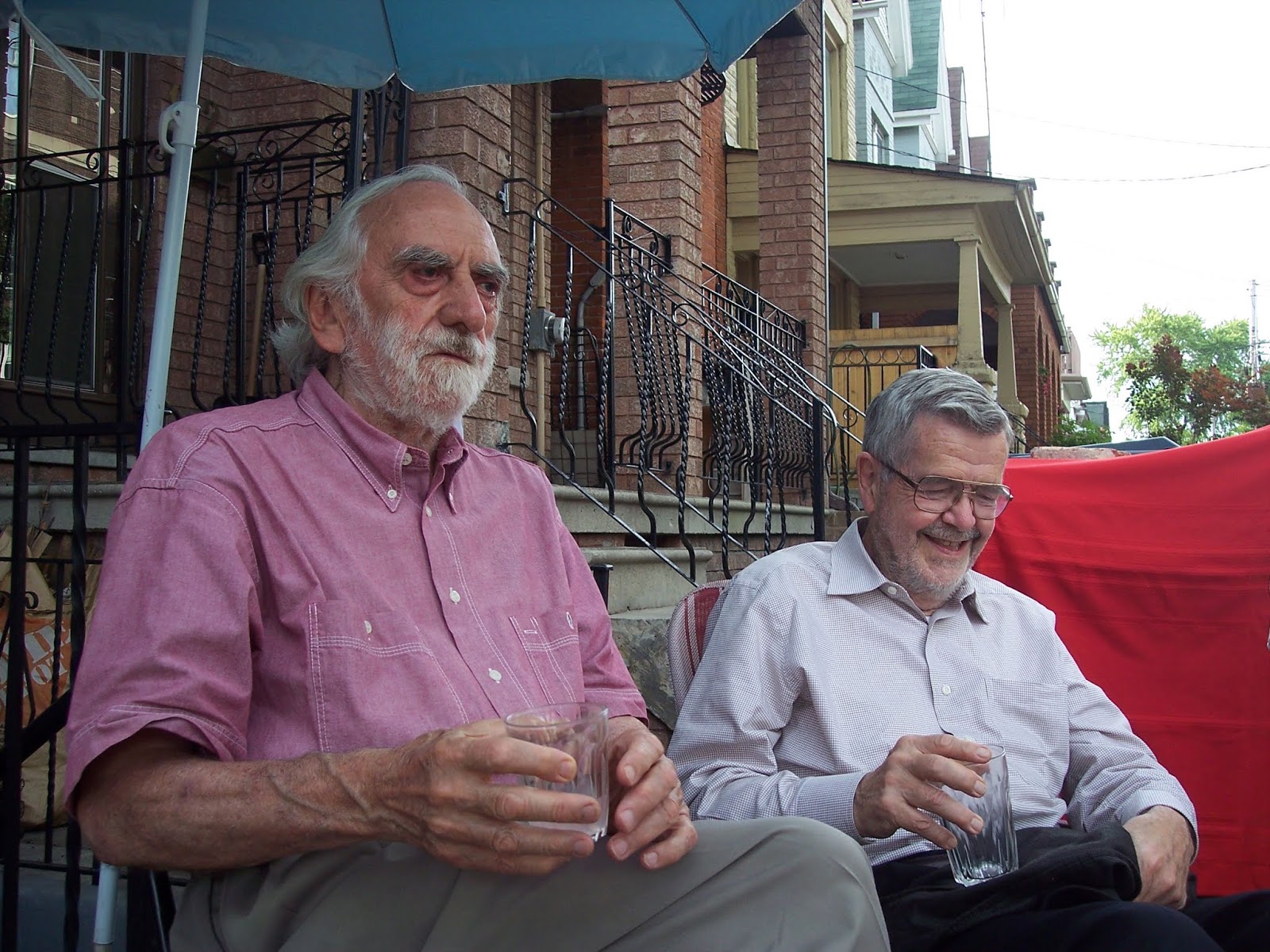
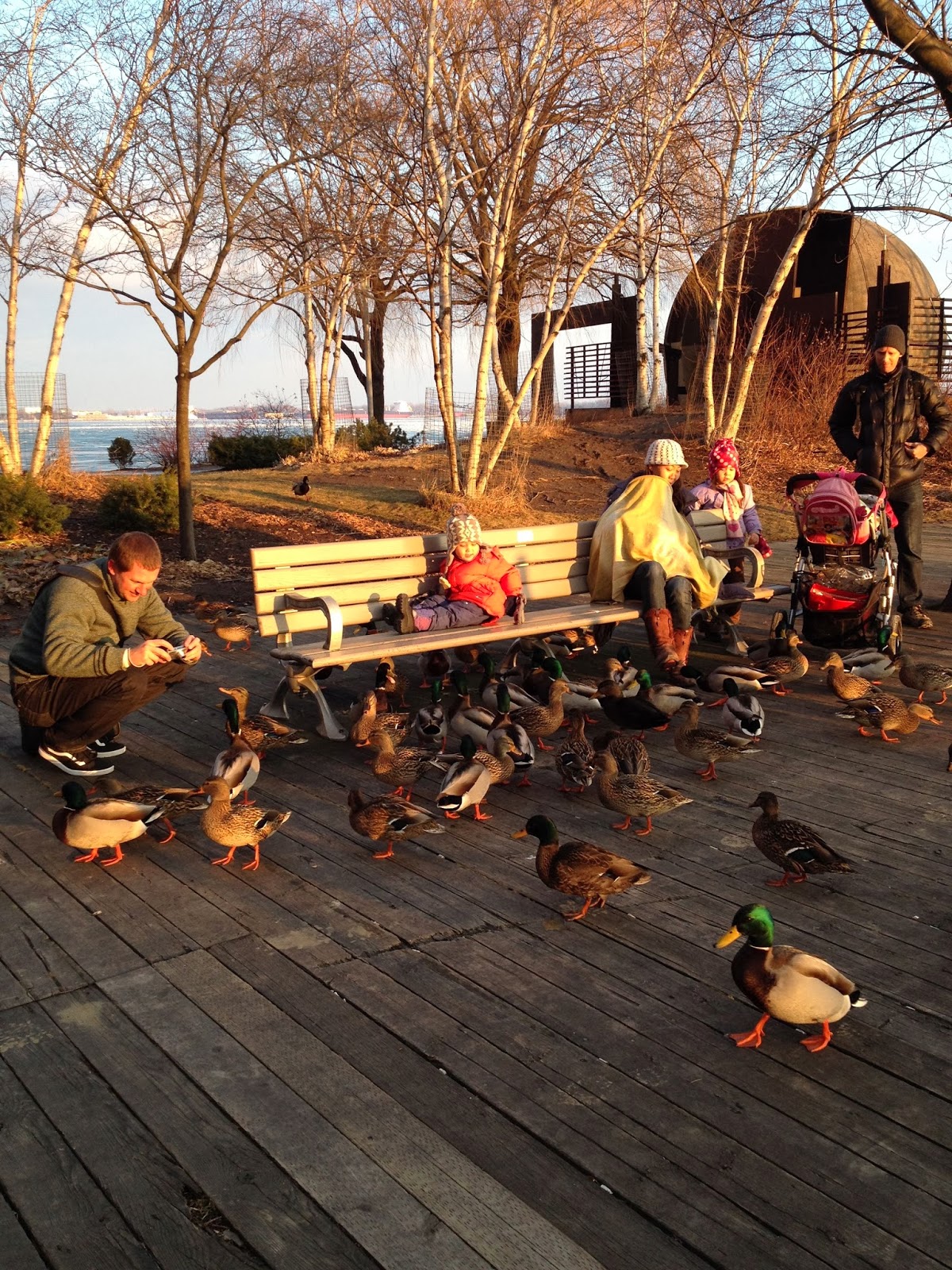
Scanner time again. Inspired by this.
Remember this?
Here is another picture of the lovely couple in Hyde Park. I took this one. I think they look even happier. I think that has a lot to do with the fact that when this picture was taken, they had been my Mum and Dad for six glorious years!
Tuesday, 8 November, 2011
parkents
Wednesday, 26 October, 2011
poetry and prose
I was catching up on episodes of TVO's The Agenda via podcast and listened to one called Obama: Can He or Can't He? about Ron Suskind's new book, Confidence Men and a discussion of his portrait of the current US president.
I lost a lot of Obama-love when Osama bin Laden was killed. I do not want to go into all that here but it seemed to me so very ugly and so very Bush Doctrine that I took down my Obama Christmas tree ornament from its home on my kitchen wall. I used to look at that little ceramic plaque with its picture of Barack Obama when I was feeling kind of blah. It would make me think about all he was facing and all the hard work he had in front of him and would put my blahs into perspective and a little dance back in my step. After the "kill operation" in Pakistan, it just started to creep me out so I put it away.
I started to get a more balanced view listening to the panel discuss the challenges for this president and how his first years in this office compared with those of other presidents.
One point that was made a few times was that President Obama's harshest critics are often those who supported him. Near the end of the discussion Steve Paikin, the show's moderator, asked if the Occupy Wall Street movement was an expression of the left abandoning Obama. It is funny because I was thinking just the opposite at precisely that moment.
I was thinking that what the discussion was pointing to was the flaw in the alpha male leader model of change agency. I was thinking of the quote Adbusters used to start the Occupy Wall Street campaign.
"The antiglobalization movement was the first step on the road. Back then our model was to attack the system like a pack of wolves. There was an alpha male, a wolf who led the pack, and those who followed behind. Now the model has evolved. Today we are one big swarm of people."I was thinking that Obama invoked the people's mic when he lead those chants of, "Yes we can!" I was thinking that we are all learning - or re-learning - that even if you get exactly the right leader into position, all leaders are limited in their role as change agent by their own learning curves, by systemic barriers to change, and by powerful opposition forces from within government and outside government. Obama's presidency points to exactly what is wrong with the lead-wolf model. I think Obama himself was careful to warn us of this and often said that the change we wanted could never be accomplished by him alone. He kept his community-organizer hat on through much of the campaign.
— Raimundo Viejo, Pompeu Fabra UniversityBarcelona, Spain
I think that the Wall Street Occupiers and all those who are acting in solidarity around the world heard "Yes we can!" and said, "The we is us." They are stepping up to change the conversation and by changing the conversation and standing in solidarity, they are giving their president energy, space and strength to do his part.
The name of this post comes from the Mario Cuomo quote cited in the program, "You campaign in poetry but you govern in prose." Perhaps, what Occupy has to teach us is how to get a little more poetry -- and dance -- into governance.
Friday, 21 October, 2011
Spain
I just got the scanner up and running after a year without it and used these pics from a family holiday in Spain to test it out.
In these pictures we are hanging out with our Mum and Dad in Nerja. It was a small town in those olden days and we spent our days on the beach paddling about, leaving messages on the sand with the smooth white pebbles, making bamboo huts to shade us from the sun. There was a river behind our apartment and sometimes we got to explore along the dried up riverbed and watch the farmers taking donkeys laden with sugar cane to market. We spent afternoons on the Balcón de Europa eating teeny, tiny ice creams for una peseta or drinking La Casera. Once I watched a bit of a bull fight on t.v. in the bar but my dad made me leave before the gross bit.
Julie had her birthday here. You can see her at her party on the bottom right. We both got donkeys. Hers was grey a straw hat. Later Grandad gave her a cart to go with the donkey. Mine was white and the most beautiful donkey ever. The big rose was given to Julie by the owner of Pepe Rico (the restaurant - which seems to be there still).
Our other favourite restaurant was El Molina (a good place for a gaggle of Mollinses to hang out) which also seems to be still in operation.


Monday, 29 August, 2011
orange you glad
![]() |
| #painttheCNTowerorange |
Can we have a state funeral?
Yep.
Can we cover Nathan Phillip's Square in chalk drawings?
Yep.
Can we ride our bikes with the casket from City Hall to Roy Thompson Hall?
Yep.
Can you make the CN Tower orange on Saturday night?
Yep.
Wouldn't it be nice if we could celebrate Jack with a few more easy yeses?
Can we have affordable housing?
Can we have a green economy?
Can we stop treating people who use certain drugs as criminals?
Can we make sure that all of our decisions honour the Charter of Rights and Freedoms?
Can we make sure that all of our decisions honour the treaties we made with Aboriginal people?
Can we honour our history of immigration by working to create better conditions and access for the people who choose Canada?
Can we honour our history as peacekeepers by always choosing peace?
And so on.
Thursday, 25 August, 2011
legacies, legends and left-wing kooks
It has been a bit of a bumpy week.
We have been thinking about Jack. We have been thinking about Olivia, Mike, Sarah, Beatrice, Jack's brothers and others close to him.
And we have been thinking about legends and legacies. Many of us are surprised at our own profound feelings of loss. We didn't know that over these many years, even though most of us only met him long enough to shake hands and share a quick laugh, Jack Layton had somehow become family to us as well.
Not for everybody of course. There is the famous "anti-hagiographical" column and the debate that ensued.
But many of us are trying to express what we feel we gained by having Jack among us and what we might have lost with his passing.
There is the divine, the glowing and the silly.
There is a Facebook group called Things I Will Do In Memory of Jack Layton.
Marcus Gee thinks that this outpouring of grief is also civic engagement. People who share the "vision of a city that looks out for its most vulnerable and cares about the environment" are using this occasion to wave at each other across the piles of orange flowers. In this sad time, we can see how many of us there really are. He thinks that the people at Toronto City Hall who have been calling us "left-wing kooks" will have to take notice. I hope he is right about both those things. Of course, I'm going to have to do more than hope.
If Michael Valpy is right*,
When polls from the past federal election are closely analyzed, what shows up is that Mr. Harper’s Conservatives were elected by a lot of old people — people over the age of 45 whose electoral participation rate is between 60 and 80 per cent, climbing higher as they climb to meet their Maker. People under the age of 45 were powerfully anti-Conservative but at best only about 40 per cent of them voted. And if they had voted in the same proportion as the over-45s, there would not have been a Conservative majority; there probably wouldn’t have been a Conservative minority. What likely we might have got is an NDP-led coalition.what all of us should probably do, one sure way to get them to notice, is show up and vote.
Then, like Rebecca, Margerit and Vanessa, do this.
*More evidence that Mr. Valpy IS correct at Scott's DiaTribes here.
Monday, 22 August, 2011
Friday, 19 August, 2011
world water week
World Water Week delegates are seeking long-term sustainable solutions that will transform how water resources are managed. The goal is to try and improve the lives of almost 900 million people who lack access to safe water, and more than 2.7 billion who lack access to basic sanitation, according to United Nations Development Programme (UNDP) statistics.
Thursday, 18 August, 2011
Wednesday, 17 August, 2011
red state, blue state
The good people at the Guardian listened to David Cameron:
"These riots were not about poverty. That insults the millions of people who, whatever the hardship, would never dream of making others suffer like this."
and wondered if he was right. They decided to see "what would happen if" they overlayed the addresses of people charged with "riot"-related crimes "with the poverty indicators mapped by England's Indices of Multiple Deprivation, which cover very small areas."
The map is coloured by the Indices of Multiple deprivation, from blue (richest) to red (poorest).
![]() |
| Click here to use the interactive map |
Liverpool University urban planning lecturer Alex Singleton took a look at the early data. He found
• The majority of areas where suspect live are deprived - and 66% of them got poorer between 2007 and 2010, when the last survey was published
• 41% of suspects live in the 10% most deprived places in England
Monday, 15 August, 2011
this is history, this is a repeat
Austerity and Anarchy: Budget Cuts and Social Unrest in Europe, 1919-2009, by Jacopo Ponticelli and Hans-Joachim Voth, Discussion Paper No. 8513, August 2011, Centre for Economic Policy Research
AbstractThe link above will download the whole paper in PDF and a summary of the paper can be found here.
Does fiscal consolidation lead to social unrest? From the end of the Weimar Republic in Germany in the 1930s to anti-government demonstrations in Greece in 2010-11, austerity has tended to go hand in hand with politically motivated violence and social instability. In this paper, we assemble cross-country evidence for the period 1919 to the present, and examine the extent to which societies become unstable after budget cuts. The results show a clear positive correlation between fiscal retrenchment and instability. We test if the relationship simply reflects economic downturns, and conclude that this is not the key factor. We also analyze interactions with various economic and political variables. While autocracies and democracies show a broadly similar responses to budget cuts, countries with more constraints on the executive are less likely to see unrest as a result of austerity measures. Growing media penetration does not lead to a stronger effect of cut-backs on the level of unrest.
Political implications
When the Great Recession spread, many governments embraced the advice from leading economists who had argued in a number of papers that budget cuts can be good for growth (Alesina et al. 2002; Alesina and Ardagna 2010; Giavazzi and Pagano 1990). In addition, an important literature has argued that there is no effective penalty for budget cuts at the ballot box – voters apparently understand the need for austerity, and do not punish governments that implement it (Alesina et al. 1998 and Alesina et al. 2010).
These results suggest a paradox – if austerity is good for growth, and the electorate doesn’t mind, why aren’t governments keener to cut their countries back to prosperity? Our findings suggest that fear of political unrest may be an important factor that is holding back governments. As expenditure cuts start to bite, the number of anti-government demonstrations, riots, general strikes, attempts to overthrow the established order, and political assassinations increases dramatically. In line with our results on expenditure, Woo (2003) shows that countries with higher levels of unrest are more indebted.
Flashback
Ontario Premier Mike Harris's Conservative government has launched a full-scale reform of the province's education system, calling for standardized report cards, a provincewide curriculum and the right to determine the amount of time that teachers spend in the classroom. He has also called for additional unspecified spending cuts of $500 million. Such changes have provoked fierce debate. [including] ...the largest teachers' strike in Canadian history.

"Before we were elected, we were criticized for saying things like 'No blade of grass will be untrampled at Queen's Park.'"
Harris Under Siege (Nov97 Updates)

story juice posts and pictures
by tracey mollins are licensed under a
Creative Commons
Attribution-Noncommercial-No Derivative Works 2.5 Canada License.

i support the creation of derivative works in principle, but this is a personal blog and contains photos and stories that are important to my family and friends. if you want to use any material created by me, my family and/or friends, please get in touch.